
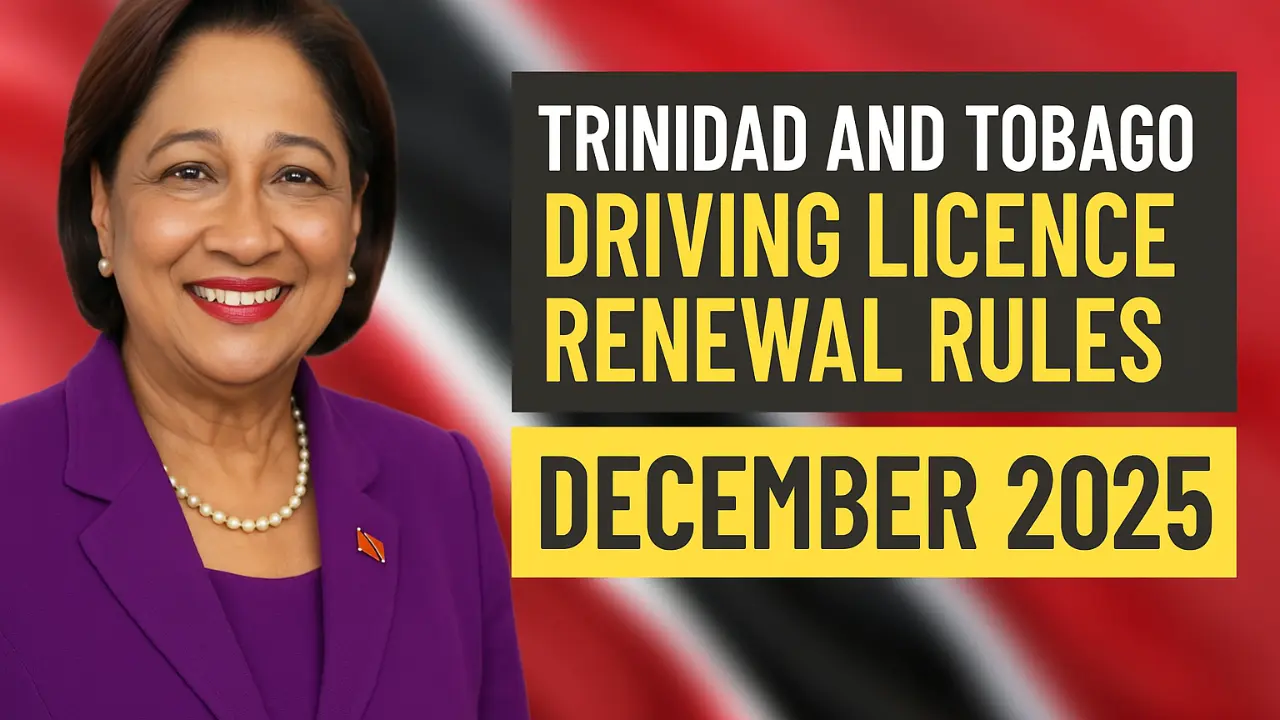
Beginning December 2025, Trinidad and Tobago’s Licensing Division will implement updated renewal rules for senior drivers aged sixty-five and older. These changes introduce new medical fitness requirements, shorten licence validity, and modernise how seniors interact with both in-person and digital renewal systems. The goal is to enhance road safety while ensuring that older adults continue to maintain independence and secure mobility.
This article outlines the full set of changes, explains why they were introduced, and provides a detailed guide to help seniors and their families prepare for renewals under the updated system.
Why Trinidad and Tobago Updated the Rules
Driving remains an essential lifeline for many older citizens, enabling them to access healthcare, visit family, shop for essentials, and remain socially active. However, age-related changes can affect driving performance. Vision decline, slower reaction times, chronic conditions, and medication interactions all influence road safety outcomes for senior drivers.
In recent years, Trinidad and Tobago has recorded an increase in accident rates involving older drivers, not necessarily due to negligence, but because of undetected medical changes. The December 2025 policy shift aims to address this trend with structured, predictable, and medically informed screening.
Officials emphasise that the intent is not to limit seniors but to ensure that licences accurately reflect fitness to drive. Most senior drivers remain safe and responsible; the updated rules simply provide a mechanism to identify emerging conditions earlier.
Key Renewal Requirements for Drivers Over 65
Beginning in December 2025, drivers aged sixty-five and older must follow stricter and more regulated renewal protocols. These include:
Annual Licence Validity
Senior drivers will now receive a licence valid for one year instead of the multi-year periods available to younger age groups. This allows medical fitness to be reassessed more frequently.
Mandatory Medical Certificate
Renewal applicants must present an up-to-date medical certificate issued by a licensed and accredited medical practitioner. The examination must include:
-
Vision screening
-
Blood pressure assessment
-
Evaluation of chronic conditions
-
Review of medication side effects that may impair driving
-
Mobility and neurological checks when indicated
Doctors may recommend additional specialist evaluations if they detect concerns.
Vision Test Requirement
A passed vision test remains mandatory. Seniors who fail the initial check will be referred to an ophthalmologist. Driving with uncorrected or progressing vision impairment poses significant safety risks, and the new rules aim to address this proactively.
Identity and Proof-of-Address Verification
Seniors must present their national ID or passport along with updated proof of address, such as a utility bill or bank statement.
Mandatory In-Person Verification
Although online systems now support pre-submission of documents, the medical certificate must still be presented in person or validated at approved medical clinics.
Step-by-Step Renewal Process for Seniors
The following step-by-step guide reflects the Licensing Division’s streamlined procedures:
Step One: Prepare Documentation
Seniors should review the expiry date of their existing licence and gather the required items:
-
Current driver’s permit
-
National ID or passport
-
Proof of address
-
Medical certificate (recently issued)
-
Passport-sized photographs if required
-
Completed renewal form
Step Two: Complete Medical Assessment
Applicants must schedule a medical appointment with an accredited practitioner. The doctor will perform a full evaluation and issue the official certificate. Seniors with complex conditions may be asked to return for follow-up appointments.
Step Three: Use the Online Renewal System (Optional but Encouraged)
The newly enhanced Online Driver’s Permit Renewal System allows applicants to pre-upload identity documents, book appointments, and pay fees electronically. For seniors unfamiliar with digital tools, family members or community centres may assist.
Step Four: Attend the Licensing Office
On the appointment date, applicants must provide the original documents for verification. A new photograph and signature will be captured if necessary. Once fees are paid and documents are approved, the renewed licence will be printed.
Step Five: Collect the Licence
Most licences will be issued the same day. In cases requiring specialist review, the Licensing Division may delay issuance until the senior is medically cleared.
Summary Table of Requirements for Drivers Over 65
| Category | Requirement |
|---|---|
| Licence validity | One year |
| Medical certificate | Mandatory, issued by accredited doctor |
| Vision test | Mandatory; specialist referral if failed |
| Online renewal | Allowed for documentation and appointment scheduling |
| In-person visit | Required for document verification and medical certificate submission |
| Fees | Standard renewal fees; fee concessions may apply for certain age groups |
| Special conditions | Restricted licences may be issued if medically necessary |
Why the Updated Rules Focus on Health and Safety
International road safety data consistently shows that, although seniors often drive fewer miles, they are more likely to be involved in severe accidents due to physical vulnerability and slower recovery. Moreover, medical conditions such as diabetes, glaucoma, dementia, stroke, and cardiovascular disease can progress quietly over time.
The Licensing Division adopted the December 2025 reforms after consultations with medical associations, road-safety experts, and senior welfare organisations. Their research highlights several key factors:
-
Vision is one of the strongest predictors of crash risk.
-
Reaction time generally decreases after age 65.
-
Medication interactions can impair judgment and alertness.
-
Regular medical screening helps detect and manage early-stage decline.
The annual permit cycle ensures that seniors receive frequent medical guidance while authorities maintain updated safety assessments.
How the New Rules Affect Senior Drivers
The changes are being received with mixed emotions across Trinidad and Tobago’s senior community.
Positive Reactions
Many older adults agree that annual health checks ensure both personal safety and public protection. Families of elderly drivers also welcome these safeguards, especially where hidden medical issues may be present.
Concerns Among Seniors
Some older drivers worry about:
-
The additional cost of annual medical visits
-
The inconvenience of more frequent renewals
-
The risk of losing their licence if their medical results change
-
Navigating the online renewal system
Senior advocacy groups have begun calling for more affordable medical screenings and clearer communication from authorities to help seniors adapt to the updated framework.
Role of Technology in the New Renewal System
The Licensing Division has incorporated technology upgrades to reduce in-office traffic and modernise the renewal experience. For younger drivers, online renewal is straightforward. For seniors over 65, the system offers benefits but must still be paired with a medical clearance step.
Key Features of the Online System
-
Appointment booking
-
Document uploads
-
Digital payment capabilities
-
Automated reminders
However, medical certificates cannot be submitted electronically and must be validated in person. This hybrid approach ensures fraud prevention and medical authenticity while maintaining convenience.
What Happens if a Senior Fails the Medical Test
The updated policy includes clear pathways for seniors who do not meet the full medical fitness criteria. Outcomes may include:
Conditional or Restricted Licences
A senior may receive permission to drive only:
-
During daylight hours
-
Within certain geographic areas
-
Under speed restrictions
-
With specific adaptive equipment
Temporary Suspension
If a treatable medical condition is identified, a temporary suspension may be imposed until the condition is managed. Senior drivers can then reapply after medical clearance.
Voluntary Licence Surrender
Some individuals may choose to surrender their licence if driving becomes unsafe. Support from family and community transportation options becomes critical in such cases.
Tips for Seniors Preparing for a Smooth Renewal
To reduce stress and avoid delays:
-
Start preparing documents at least four weeks before licence expiry.
-
Schedule medical appointments early to allow for additional tests if needed.
-
Carry photocopies of all documents to the Licensing Office.
-
Ask doctors to use standardised medical certificate forms.
-
Seek assistance from relatives or local community groups for online booking.
-
Consider alternative transportation arrangements if medical clearance is uncertain.
What to Expect in 2026 and Beyond
The December 2025 rule changes mark the beginning of a broader modernisation effort across Trinidad and Tobago’s transportation regulatory framework. Future initiatives under consideration include:
-
Expanded partnerships with medical clinics for on-site screening
-
Digital medical form submission with secure encryption
-
Enhanced public education for older drivers
-
Updated training materials for doctors assessing driving fitness
-
Improved paratransit services for seniors transitioning away from driving
The Licensing Division aims to balance safety with dignity, ensuring that senior citizens remain respected participants in the national mobility ecosystem.
Conclusion
The updated December 2025 licence renewal rules for Trinidad and Tobago drivers aged sixty-five and above introduce a more structured, health-focused, and safety-driven approach. Annual medical certification, shorter licence validity, and strengthened verification processes reflect the country’s commitment to reducing risk while preserving independence for older adults.
As long as seniors prepare early, maintain regular health checkups, and utilise the available online and in-person support systems, the new framework can function smoothly. These changes serve not only as a regulatory update but also as an investment in safer roads for all citizens.





Leave a Comment